On July 31, 2026, I finished Anna Karenina for the first time. I choose the words “first time” to prepare the way for the next, because this book is simply that great.
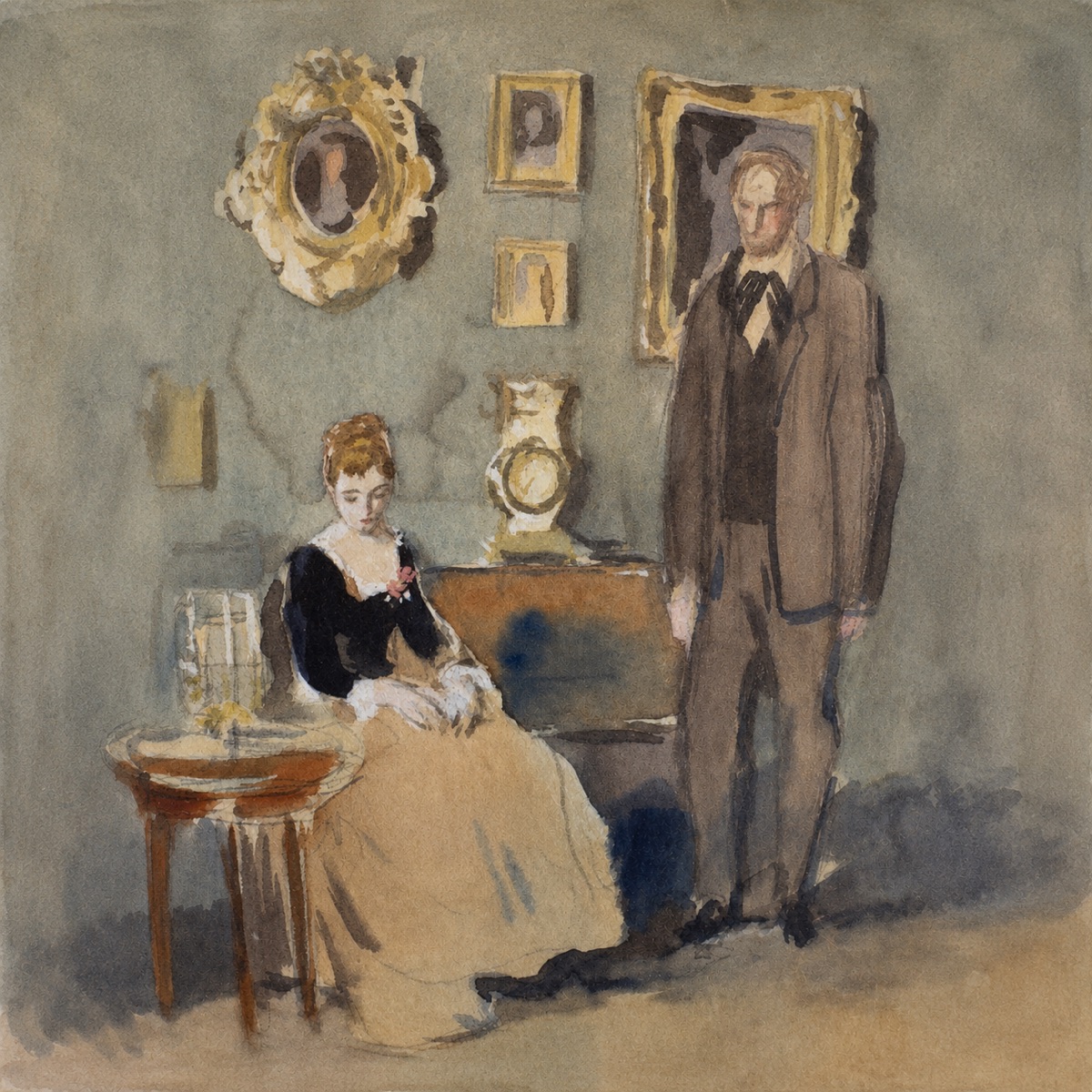
Anna Karenina was written by the great Russian author Leo Tolstoy. It is a universally recognized classic, and it is the second work of Russian literature I have read; the first was Dostoevsky’s Crime and Punishment. Russian literature has shaken me profoundly. Neither book has an especially complicated plot, but simply telling a story was never the author’s true purpose. Both Tolstoy and Dostoevsky weave fine-grained observation into their narratives and use long conversations to stage arguments about values and philosophy. Their books carry not only immense literary value, but immense philosophical value as well. Anna Karenina is very different from the other books I have read. Unlike Dostoevsky in Crime and Punishment, Tolstoy does not explain an idea all at once. He develops it across many passages and many rounds of interaction between his characters, until the full complexity comes into view.
Some books become classics because, however the age may change, their treatment of certain questions keeps reminding us which questions deserve our attention. Those questions remain with every generation. No matter how society develops, they never disappear. If anything, they grow more important and demand more serious thought from each of us. Tolstoy’s writing on the complexity of love, the fear of death, and the meaning of life, for example, speaks to concerns that persist across generations. We live in an advanced age in which scientific explanations have gradually replaced religious ones, yet we have lost some of our courage and strength in the face of death. In this new age, finding a way to confront these questions has become more urgent and more necessary. The answers modern people seek have already been written into the works of the sages who came before us. That is what the classics can do: give us the courage and strength to search for answers. Yes, only the courage and strength to search—not the answers themselves—because there is no single truth in the world. Everyone has a truth they take to be their own. If that truth brings the person who believes in it closer to genuine wisdom and makes them kinder, then it is truth.
Revising the Way I Write About Books: From “Feeling” to “Reflection”
If a person reads only superficially, finishing dozens of books in a year may not change them very much. But if a person can settle down and read deeply, even one or two books a year can bring enormous change. What determines whether we read superficially or deeply? Deep reading requires thought that does not stop at following the plot or feeling a connection with the text. We must examine our own flaws, internalize what the book has to teach us, and make the effort to put that knowledge to work in our lives, so that we become better.
When I look back at what I have written about books, I realize that they truly were just records of my feelings, with very little reflection. Everyone can feel; not everyone can reflect. Feeling comes naturally. We read an impassioned passage and grow excited ourselves; we read a painful passage and become sad. The memories we have accumulated in our own lives give us the chance to resonate with the words. If someone has never personally experienced betrayal by a person who once loved them, then when they read a passage about such a betrayal, they may feel only the sadness on the surface. They cannot reach the deeper humiliation, or the many other feelings beneath it. Reflection, by contrast, runs against human nature. It demands self-criticism and forces us to face our truest selves, which most people cannot do. Reflection also means requiring ourselves to change. People are always thinking about changing the world, but rarely want to change themselves. That is why examination and change make reflection so painful. Is everything painful necessarily good for us? I cannot say. But I am fairly certain that what feels comfortable is often bad for us.
The first step of reflection is, of course, to understand the events a passage describes and the meaning its author intends. The second is to examine ourselves: place ourselves in a similar situation and ask what we would feel. If we were in the same circumstances, would we behave better, or worse? The third step is to ask what we need to do in real life—either to prevent something bad from happening or to make a positive contribution to the good of society.
Art draws its inspiration from life, but once created, it can serve life in return. I imagine that many writers do not merely want to tell a story. Through vivid and engaging narratives, they also want to convey the values they support or reflect the social realities they have observed. A good work of literature should possess not only sophisticated descriptive technique, but the power to offer its readers constructive values and philosophical thought.
So in this essay, and in the essays I write in the future, I will include more reflection. I will question myself more often and think more carefully about what I ought to do. Only then can the work in my hands fulfill its greatest and most fundamental value, and only then can I honor the author’s hope: to expose the darkness in the human heart and awaken the goodness within it.
“Vengeance Is Mine; I Will Repay”
The book opens with a line that left a deep impression on me: “Vengeance is mine; I will repay.” It comes from the Bible, most famously Romans 12:19, which in turn draws on Deuteronomy 32:35. These are the words of God. They mean that the authority to avenge and repay belongs to God, and that God alone will carry it out.
I am only a small and ordinary human being. How could I possess the right to judge another person, let alone the right to punish them? Since I have neither right, and since I know that what they have done is wrong, all I can do first is require myself not to repeat the same mistake. I am someone who makes mistakes all the time. Even if I had the right to judge another person, I would not be qualified to do it.
When I point one finger at another person, four fingers point back at me. When I judge someone else, I view the matter from the perspective of an outsider. I am never more rational than when I am judging another person. But if the same thing happened to me, could I really behave better than the person involved? Might I do something even more absurd or ridiculous? I cannot keep criticizing others by instinct while refusing to criticize myself. My own problems are far more numerous, and unlike other people’s problems, they belong to me. If I have not even resolved my own, how can I talk about resolving someone else’s problems, or the problems of the world? When I was young, my dream was to change the world. As I grew older, I realized that the world is full of people who want to change it, yet have never thought of changing themselves. Cursing someone else feels satisfying; cursing ourselves is painful.
Sometimes I should look in the mirror more often and see what kind of person I really am. I should identify my flaws, work to correct them, and spend less time pointing at people and things outside myself. Even if I were perfect and without fault, I would still have no right to judge another person.
Before someone has left this world, we can never determine once and for all whether they are a good person or a bad one. Even God must wait until a person has completed their life before passing moral judgment on them. The judgment of the legal system only temporarily restricts certain people’s physical freedom. Final judgment must be left to God, or to the moral order of the universe. We must believe that good people will be rewarded, even when no reward arrives; we must believe that bad people will face consequences, even when no consequences arrive. The world is absurd and unreasonable, but its flaws should not bury my pursuit of beauty.
Then what if I am the one who has been treated unjustly? I seem to have three choices. The first is to use the law to protect my rights. But the law is not always worth bringing into a conflict; its help should be sought only when there is no other choice. The second is to answer evil with evil: treat the other person exactly as they treated me, or repay them twice over. This may look brave. It may seem to defend my dignity and prove my manhood. But it also leads to mutual ruin—to jail if I win the fight and the hospital if I lose it. It is not a rational choice. The third is to answer evil with goodness. Do not quarrel with petty people, and understand that the happier person can afford to yield. Letting one moment pass can restore calm; taking one step back can open up the horizon. One reason cruel people do cruel things is that they want to provoke an ugly response. If someone insults me and I simply smile without replying, might they not feel awkward, or even ashamed?
As the person involved, I need to learn how to respond to life’s misfortunes in the most constructive way possible. I also need to recognize what is right and what is wrong, and remind myself to do the former rather than the latter.
In the relationship between Anna and Karenin in Anna Karenina, Anna betrays Karenin and falls in love with Vronsky. If I were betrayed in my own life, how should I respond? Should I expose the other person and do everything I can to make their life miserable? But if I did, what would I gain? Once again, it would seem to end in mutual ruin. Perhaps the right response is not to place myself in the position of judging another person. Perhaps it is to step outside the logic of deciding who is right and who is wrong, and find a way to understand and forgive from the heart.
We must understand that human beings are irrational, and that love is fluid. Every person and thing outside me is unstable. What appears stable is merely more stable than what appears unstable. People should not lightly say, “I will love you for the rest of my life.” The promise itself is absurd and irresponsible, because the world contains too many things more important than romantic love and worthy of our devotion. Once we understand this, we can understand betrayal—and betrayal can take place between friends and business partners as well as lovers. We must also understand that we are not perfect. There will always be someone more perfect than us, and everyone has the right to pursue what seems more perfect, even when doing so is immoral. If someone leaves me, it is because they have met someone they consider better than me. I must acknowledge that fact and admit that a gap exists between me and others, then work to make myself better. Yet the endless pursuit of perfection is itself a mistake, because someone more perfect will always exist. Once we have found a shell we love, we should stop returning to the shore. Once we have picked the most beautiful rose, we should stop returning to the garden. We should learn to see the imperfections of the people we cherish as expressions of their perfection—as part of what makes them who they are. True happiness does not mean doing new things with new people. It means being willing to do the same things with the same person.
I do not wish misfortune upon anyone, but I hope that people possess the courage and wisdom to face it. We must acknowledge the complexity of human nature. We must accept that people can do all kinds of astonishing and unpredictable things, and that we may be capable of doing the same. We cannot control what happens to us, but we can control how we look at it. Like other animals, we experience every kind of emotion. What makes us human is our capacity to govern those emotions.
The sky is wider than the sea, and the human heart is wider than the sky. We must learn to forgive others, knowing that one day we too will need forgiveness. Only after requiring the best of ourselves do we earn the right to ask the best of others. When we make a mistake, we should correct it. When someone else makes a mistake, we may offer help, but we have no qualification or right to judge them. We never possess enough information to determine whether someone is truly good or bad—and in any case, their life is not yet over.
What Is True Happiness?
“All happy families are alike; each unhappy family is unhappy in its own way.” This is the first sentence of the book, and it left a deep impression on me. Tolstoy constructs and portrays four major families in the novel. Three are unhappy, and one is happy. Only when I finished the book did I understand the purpose and meaning of placing that sentence first.
The book has two principal storylines. One unfolds around the unhappy family formed by Anna and Vronsky; the other, around the happy family formed by Levin and Kitty. The first embodies passionate love, while the second embodies the love of daily life.
Passionate love is intense and makes the heart race, but it is also dangerous and unsustainable. Anna is unfaithful to her husband and chooses to be with Vronsky even at the cost of her reputation. She believes that this new family will bring her happiness, only to find that it has carried her toward an abyss of death. Anna’s infidelity is not entirely her fault; her husband also bears responsibility. There are many conflicts between them, and those conflicts are the chief cause of her betrayal. My impression is that Anna and her husband never communicate effectively. Many conflicts in life begin with misunderstanding. Once a misunderstanding arises, if neither person chooses to listen to the other and clear it away, the long-term damage to the relationship can be enormous. Anna does not recognize this, which is why she suffers in her relationship with Vronsky as well. If we cannot see what we have done wrong and correct it, then finding a new person to love will only carry us toward the same unhappy ending. We must first learn how to love well and only then decide to love another person. Otherwise, we cause lasting harm to both them and ourselves.
Levin and Kitty’s love, by contrast, is ideal and beautiful. Levin endures Kitty’s rejection and passes through repeated cycles of doubt and renewed confidence before they finally come together. Their life still contains disappointments and further occasions for self-doubt, but because Levin and Kitty understand how to love, they ultimately reach the best ending. True love is not flawless. It is two people knowing how to respect each other and solve problems together. I call theirs the love of daily life—a love that can truly make us whole. This kind of love is rooted in work, domestic details, and family. It may contain less passion, but it is lasting and enduring, a love that allows us to find happiness in peace. Good love cannot be merely the product of hormones. It is the choice to take responsibility, to face the unknown with courage, and to taste the full range of life together with another person.
As I read the book, one question kept returning to me. It grew more urgent whenever I reached another passage about Anna’s suffering: why did Tolstoy name the novel after its unhappy heroine? Why Anna, rather than the happy Kitty? Only after finishing the book did I understand that we cannot warn readers merely by emphasizing what is good. We must show them what is bad. I do not believe that reading a comedy can make someone happy, but I do believe that reading a tragedy can help someone avoid suffering and become happier as a result. I think this, too, was what Tolstoy wanted to achieve. He used darkness to remind people of the beauty of light, not the other way around. The same principle applies to the study of successful people. We overestimate the value of studying what successful people have done, and underestimate the warnings offered by the mistakes of those who have failed. Happiness is not something we win by force. It arrives naturally when we learn to avoid unhappiness.
Happiness is choosing to embrace the ordinary. Happiness is having the courage to take responsibility. Happiness is treating every person with kindness.
What Is the Meaning of Life?
To search for the meaning of life, we need not only abstract philosophical thought but an active commitment to real life and the responsibilities it places before us. If that search remains trapped in ideals and speculation, never taking root in concrete life, responsibility, and our relationships with other people, then when we finally face the flaws and imperfections of the real world, our lofty ideals may lose their foundation. They may even drive us into disillusionment and collapse.
As I see it, life has no meaning, and neither does the universe. Human beings are no different from pigs, dogs, cattle, sheep, or a stone by the roadside: none of us carries an inherent meaning. What separates us from other animals is our ability to search for meaning ourselves. Yes—the meaning of life lies in the search for meaning. If we were born already knowing what life meant, what point would there be in living? If we truly understood the origin of the universe and the meaning assigned to us, would we lose our reason for living at the very moment we learned the truth? We live because we have been thrown into this world without a clear explanation. We must think, speak, walk, meet different people, and follow different roads as we search for the meaning of our own existence. Many people reach death without knowing who they are or where they are going. But so what? The meaning of life lies in seeking meaning, not in arriving at one fixed answer. This may sound like a paradox: if life has no meaning, can the meaning we find in searching for meaning still be a legitimate meaning?
In the same way, I believe that too much philosophical thought can be dangerous and hollow. What is the meaning of life? This book offers an answer: faith does not free a person from flaws and suffering, but in the midst of an imperfect daily life, we can keep choosing the good, and in doing so keep life from becoming empty. When we stop thinking excessively and fruitlessly about the meaning of life, and invest our energy in living instead, the emptiness within us begins to recede. That is where the meaning of life lies.
Love the flowers and grass around you. Love every person beside you. Love clear skies, and love rainy days too. Admire the rainbow, and admire the storm. Love yourself, and love this world, which has a chance to become better because you are in it.
A Few Smaller Themes
Anna Can Resolve Her Brother’s Family Crisis, Yet Creates the Same Chaos in Her Own
Anna personally steps in and resolves the crisis in her brother’s family, yet she cannot prevent herself from causing the same kind of crisis. She knows that a betrayal born of desire shattered the harmony and happiness of her brother’s household. Why, then, can she not restrain her own desire? As outsiders, we are always quick to grasp the root of a problem and propose a solution. But once we become the people involved, do we lose that ability and become irrational? We are always better at comforting others than comforting ourselves. Or perhaps we can reason with ourselves but do not believe we are wrong, and therefore see no need to change. People always hope to change the world, yet never think of changing themselves. Am I sometimes one of those people? I dislike it when others reject my view without first acknowledging that it may contain something reasonable. Why, then, do I instinctively reject other people’s views? Why do we demand the best of others and insist that they never leave us, while granting ourselves the right to choose someone else and walk away? Perhaps we should admit that many things lie beyond our control. When someone leaves us, we should learn to understand, while still recognizing that our own value remains.
And why, if Tolstoy understood the essence of life and the path to happiness so well, was his own life still so troubled and painful that he eventually had to leave home?
The Railway as a Sign of Anna’s Fate
The railway is cold. We can see it in its form and hear it in the hard, metallic sound of a train passing along the rails. The railway is fixed as well: a train is sent to a destination and can only continue toward it. It cannot choose its own direction. And the railway is long, stretching beyond sight, just like our lives. Standing in the middle of the tracks, we try to see where they lead, but at the edge of our vision there is only mist and the unknown.
From the moment Anna sees a man die beneath a train at the beginning of the novel, her fate appears to have been foreshadowed: death. Anna is like a train on the railway, its destination already determined. Is that what fate means? Is every human life predestined? If every life ends in death, what is the meaning of our time in this world?
Kitty Truly Is an Angelic Character
Kitty strikes me as a character who radiates an angelic light. Sometimes the light dims and sometimes it brightens. It is bright most of the time, and even when it dims, it does not make us grieve. At first Tolstoy portrays Kitty as immature, someone who imitates others in certain ways. By the end, she has become, to me, the most mature woman in the novel. Kitty’s love for others is never abstract. When Levin’s elder brother lies dying, the person who cares for him is not Levin but Kitty. Kitty has a rich understanding of life. She arranges everything perfectly, recoils from no one, and treats every person as someone who genuinely deserves care. Levin spends so much time thinking about the true meaning of life, never realizing that his own wife is the finest example he could learn from.
Kitty is a good wife. She learns to care for her husband and knows how to leave him time and space of his own, unlike Anna, who wants her husband beside her at every moment. The more tightly we try to hold on to something, the more likely it is to escape us. Anna’s need for love is too intense, and it drives her toward an extreme. That extremity not only brings about her unhappy end but harms the people she loves. Kitty understands that love requires restraint. She enriches her own life so that she can withstand the time her husband spends away from home. We need interests and pursuits beyond love to support our lives. Only then can we learn to love another person while still possessing the courage to endure the grief if that love disappears.
Tolstoy’s Memorable Portrayal of Domestic Life
Interested readers may want to look at the second chapter of Part Six: the women talking on the terrace, and Kitty hoping Koznyshev will propose to Varenka. This passage shows how Tolstoy’s dialogue differs from that of other writers. His conversations pass through many rounds and shift continually from one character to another. Along the way, he folds in details unrelated to the central topic, yet the conversation never loses its continuity. Instead, the whole scene grows richer and more vivid. As I read it, I could picture a harmonious film scene unfolding to a gentle melody.
Conclusion
Anna Karenina is a book everyone should read. It teaches us what good love, a good life, and a good way of living truly mean.
要政阳
Beijing, July 31, 2026